







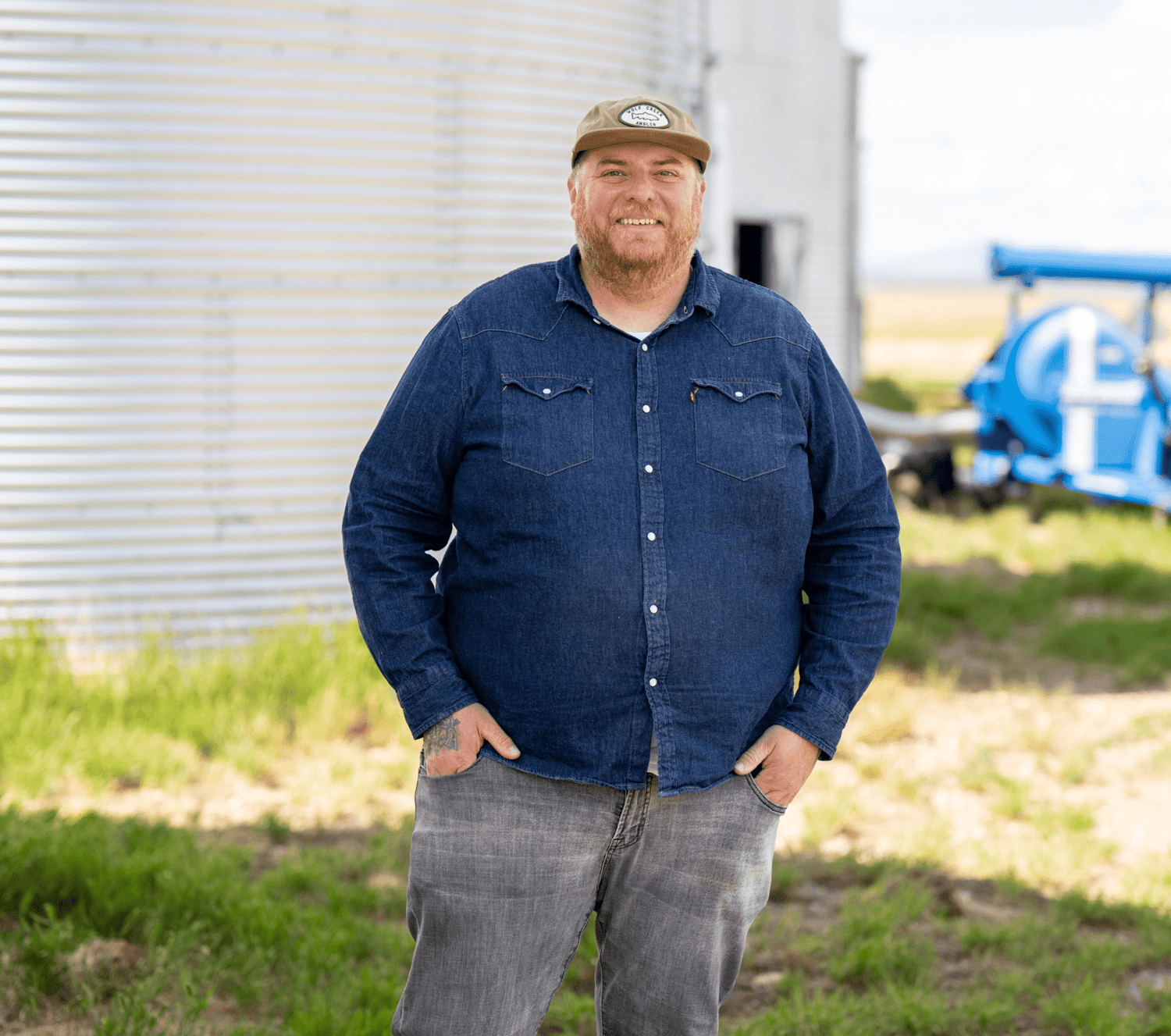
If you've ever wondered where the chickpeas in your hummus actually come from, meet John Wicks, a third-generation farmer running Tiber Ridge Organics in north central Montana's Golden Triangle. John grows organic, regeneratively certified chickpeas, and his path to get here started with tragedy, a whole lot of stubbornness, and a punk rock playlist.
John was 21, studying agriculture at Montana State, and delivering pizzas on the side when his father passed away that winter. The crop was already in the ground back home, so he came back that spring and just started doing upkeep. No ramp-up period, no previous generation standing beside him to show him the ropes.
"It was really a challenging time to have that grief you're going through and then the stress of having to keep this going for the family legacy," John says. His mom, who'd helped make management decisions alongside his dad, became his go-to resource, along with a few neighbors.
But not having an older generation looking over his shoulder had an upside: it left him open to doing things differently.
John grew up playing in punk rock bands, and that "do the opposite of what you're told" streak followed him onto the farm. When he started planting cereal rye for its soil health benefits, neighbors warned him he'd ruin the farm. One guy even drove out from eastern Montana with a "no rye" sticker on his truck, worried it would cross-pollinate his wheat.
John's response: it was yielding more money per acre. "By that logic, keep your wheat out of my rye field."
That same willingness to experiment eventually led him to cover cropping, another practice locals were skeptical of, which held up beautifully through a wet year when conventional fallow fields didn't fare as well.
The tipping point wasn't just philosophical, it was physical. Years of working around seed treatments, fertilizer dust, and chemical drift eventually led to John getting pneumonia. His mom, who has to get steroid shots in her throat after chemical exposure, was dealing with her own health toll. Around the same time, farmers in the area were using paraquat to speed up chickpea harvests, a chemical John describes as genuinely dangerous.
"That was about the time... I just thought that was the point where I was not doing it anymore, and I needed to figure something else out."
The transition wasn't easy. Banks weren't always convinced organic farming penciled out financially, even when John showed them the per-acre numbers. But he kept going and found that even in years with a rough-looking field or a lower yield, he never wanted to go back.
One of the more striking things John shared is his take on the "feed the world" narrative that gets pushed on farmers to maximize yield at any cost.
"We grow enough crops to feed more people than there are on Earth every year... I'd rather we get paid a fair price for our crop, maybe produce less, and we're still producing enough food for everyone. I think too much emphasis is put on yield and not enough on stewardship and profitability."
Chickpeas aren't just delicious (John's favorite way to eat them is straight out of the field, popped fresh from the pod) — they're doing real agronomic work. Because they fix atmospheric nitrogen through their root nodules, chickpeas naturally feed the soil for the next crop in rotation, cutting down on the need for synthetic fertilizer. That's a big part of what makes an organic system work without leaning on chemical inputs.
They're also notoriously tricky to harvest. The plants grow low to the ground, and fields need to be rolled flat just to get the cutting bar low enough to pick them up without picking up rocks too. Worth the hassle, John says.
For John, working with a brand that wants to know exactly where its chickpeas come from (and how they're grown) changes the way he thinks about the whole process.
"You handle the crop with more care. Everything that you do from step one, you're thinking about how this is going to be food... having this relationship with the end users has really made me a lot more passionate about what I'm doing. It gives you the drive to continue."
At the heart of it, John says what he's really fighting for is keeping family farms on the land, not just his own, but the whole model. Less consolidation, more people actually tending the soil, more stewardship passed down instead of extracted for a quick profit.
"I'm here for a short amount of time in my farm's legacy, and I've got to do the best that I can. I don't want to have an extraction viewpoint. You need to be thinking of the next generation all the time, and the generations past."

Leave a comment
This site is protected by hCaptcha and the hCaptcha Privacy Policy and Terms of Service apply.