




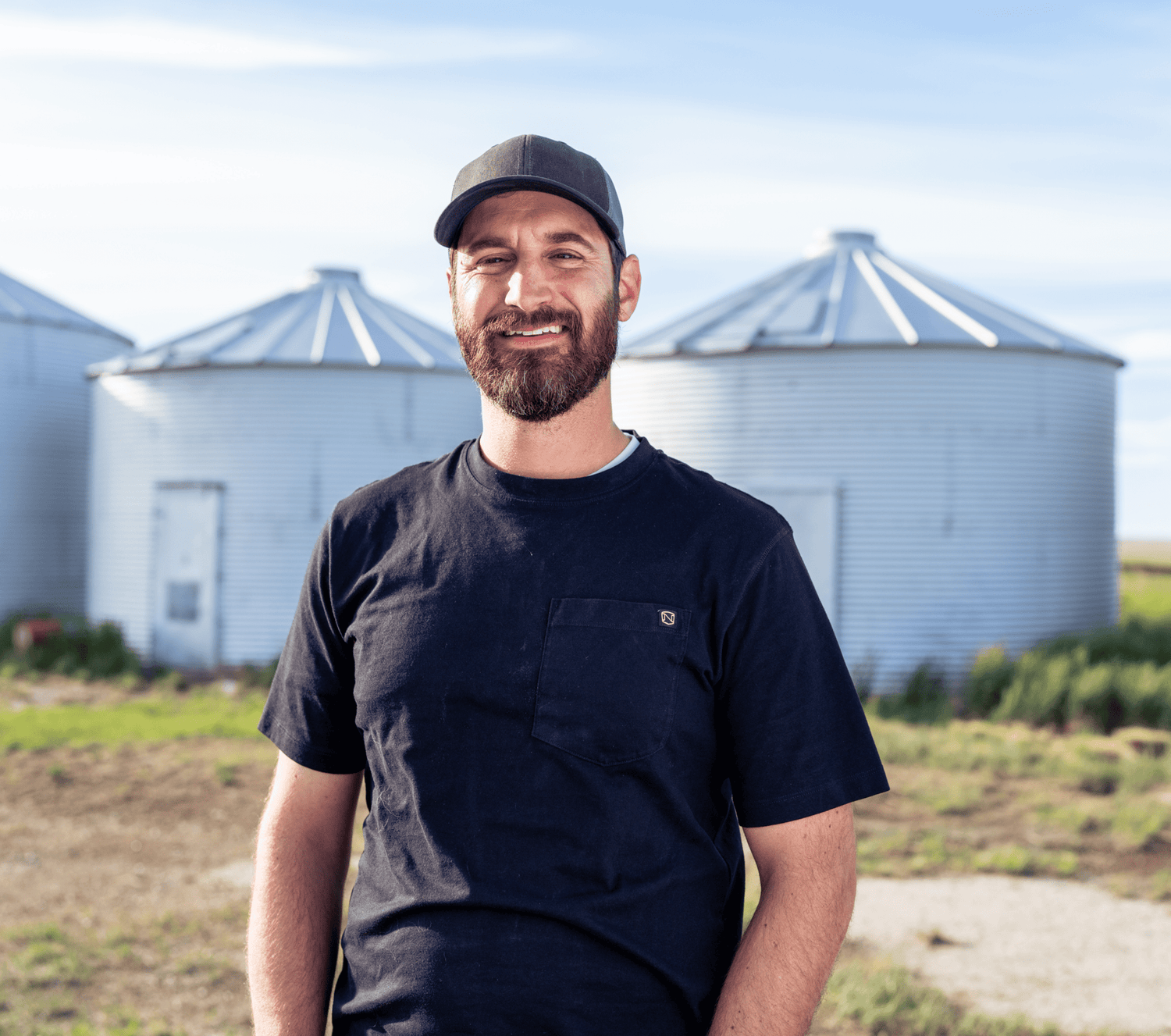
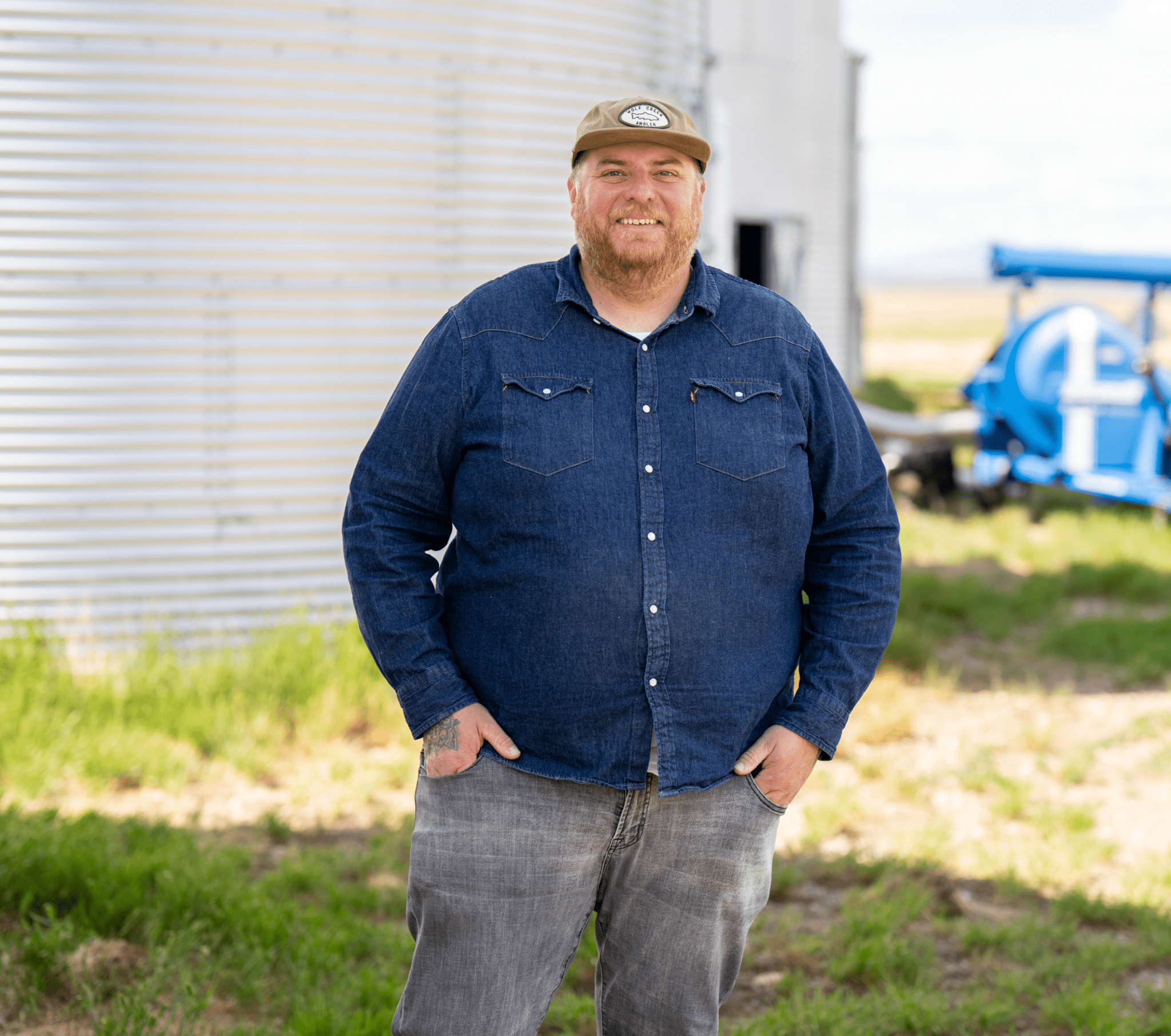
Michael Deakin runs Deakin Farms in north central Montana alongside his wife, Emily. It's just the two of them handling everything from the books to the broken machinery. He's also got an engineering degree and a hard-won plant science thesis under his belt.
Michael's family has been certified organic since 1994, when his dad bought the farm in Utah and noticed neighbors growing straight winter wheat organically. So Michael grew up around organic practices. But as he'll tell you, "organic" and "regenerative" aren't the same thing.
"We farmed organically, but not very regenerative, not really focused on the soil health as much," he says. Down in Utah, the farm was mostly one crop, fallowing every other year, with essentially one customer. It worked, but it wasn't maximizing what the land could do.
When Michael and Emily bought their own farm in Montana and started working with Timeless (the processing facility that also works with Little Sesame's other Montana growers), something clicked. Instead of letting fields sit fallow every other year, they planted lentils in the off-years instead.
"I realized I have produced more food and more dollars for me as a farmer in two years of growing the grain and then the lentils, than I would have if I would have fallowed that." That single decision reframed how he thought about every acre on the farm, treating fallow time as wasted sunlight and rain instead of a necessary rest.
Before Michael saw farming as his path, he got an engineering degree, which gave him a habit of thinking in numbers and testing hypotheses. Years later, a Utah State University professor running test plots on land Michael's family was leasing pulled him into research, and Michael ended up (slowly — by his own admission, five years slow) finishing a degree in plant science.
That background shapes how he approaches regenerative practices today: not as an article of faith, but as something to actually measure. "We still need to quantify if these new methods are being effective and reaching our goals or not," he says. Small test plots on his own farm let him try an idea, measure the results, and only then roll it out at scale.
Michael pushes back on an old-school metric of success: a clean, weed-free, uniform-looking field. He once asked a fellow farmer point-blank whether he'd rather have a good-looking field or a profitable one and the farmer chose the good-looking field, just so the neighbors would see he was "a good farmer."
"When you're doing organic farming, nature is not uniform," Michael says. "It's not going to look like a manicured lawn at all times. But in order to grow food that's the most nutritious for people, that's the way I like to do it."
Ask Michael about chickpeas and you'll get a mixed review. On one hand, they fix their own nitrogen, need no fertilizer, and add root diversity to his rotation. On the other, they're an expensive, finicky crop. Big seeds mean higher planting costs, and they're more vulnerable to disease and pests than a cereal grain.
"It's more expensive to put in, and there's more things that can go wrong... but at the end of the season, they can turn out really good. It's definitely more of a gamble... but that's the game of farming. I guess it's the undiagnosed gambling addiction that we all have."
Deakin Farms doesn't irrigate at all. Every drop of water their crops get comes from rain, and the region only receives about 12 inches of precipitation a year. Growing a diverse mix of crops with different water needs and timing is Michael's main hedge: if one crop struggles in a dry stretch, another might catch a rain window it needed.
One of the more candid moments from our conversation: after watching how chickpeas are grown conventionally, including the chemicals applied throughout the season and right before harvest, Michael said it changed his own grocery list, not just his farming practice.
"I just don't think I could buy anything that's not organic anymore... it's just kind of scary as a consumer."
For Michael, the appeal of working with Little Sesame isn't just a better price, it's being valued for how the crop is grown, not just what it costs.
"They care more about how that chickpea is actually produced, rather than just having the cheapest chickpeas they can find anywhere in the marketplace."
Michael and Emily are raising their kids on the farm, and he's clear-eyed about why organic and regenerative practices made that possible in the first place: "If we had tried to buy this farm and support a family just using the methods of conventional commodity agriculture, even if we had the top yields of anybody in the county, we wouldn't be producing enough value to actually support a family." Farming differently wasn't just a values choice, it was the only way the math worked.
It also means his kids can ride along on the tractor without him needing a hazmat suit to apply anything.

Leave a comment
This site is protected by hCaptcha and the hCaptcha Privacy Policy and Terms of Service apply.